








































When people shop for nice bedding, it’s a habit that they often check the thread count first. That number shows how many small threads fit into one inch of fabric. With cotton or bamboo, sure, a high number usually means softer sheets.
However, silk follows a very different set of standards.
When you’re looking at real luxury silk, like the ones from MANITO, thread count can actually be confusing. The number does not directly indicate silk quality. What truly matters is its breathability, durability, and natural softness. Just looking at the number can make you miss the best parts.
Table of Contents
What Is Thread Count?
Thread count is simple; it’s how many threads go up and down and across in one square inch of fabric. It’s often used for cotton sheets to show how thick or smooth the weave is.
But silk threads are way thinner. Even a loose weave can have a big thread count because the fibers are so fine. That’s why using this number alone for silk doesn’t really make sense.
Two silk sheets can both say “800 thread count.” One silk can feel thin. One silk can feel thick and strong. To know which is better, look at the silk type, how long the threads are, and how heavy it is.

Does Thread Count Indicate Silk Quality?
Not at all. Mulberry silk is made from a natural fiber known as fibroin. Each filament is incredibly fine; therefore, silk already consists of an enormous number of microfilaments.
That’s why thread count doesn’t say much. You could have cheap silk that looks great on paper with a high count, but feels flat and loose after a few washes. High numbers don’t mean better fibers or stronger fabric; it just means more threads in a small space.
So, don’t just look at the number. With silk, what matters is the quality of the threads and how the silk is made.
Introducing Momme: A More Accurate Indicator
Here’s where things actually start to make sense.
Silk isn’t measured best by thread count; it’s by momme. Momme tells how heavy and dense the fabric is. Bigger momme means thicker, stronger silk that lasts longer and has more real silk, not just threads.
So, when you buy silk, check the momme. It shows the real quality, not just a big number for show.
Thread Count Reference Range (If Needed)
Still, if you’re used to cotton, here’s a rough idea.
Good silk bedding usually falls around 400 to 800 thread count, which matches a 19–25 momme weight. This range is what you’ll find in most high-end silk sheets and pillowcases.
But don’t let that number guide you too much. The momme, silk grade, and weave quality matter a lot more. And if you see a brand highlighting a 1,000+ thread count but not stating the momme? That’s a red flag. It probably means they’re using cotton-style marketing tricks instead of real silk standards.
Other Factors That Define Silk Quality
- Silk grade: Other than momme and thread count, the silk grade matters too; the best is 100% Mulberry 6A, long, strong threads that feel soft and shiny.
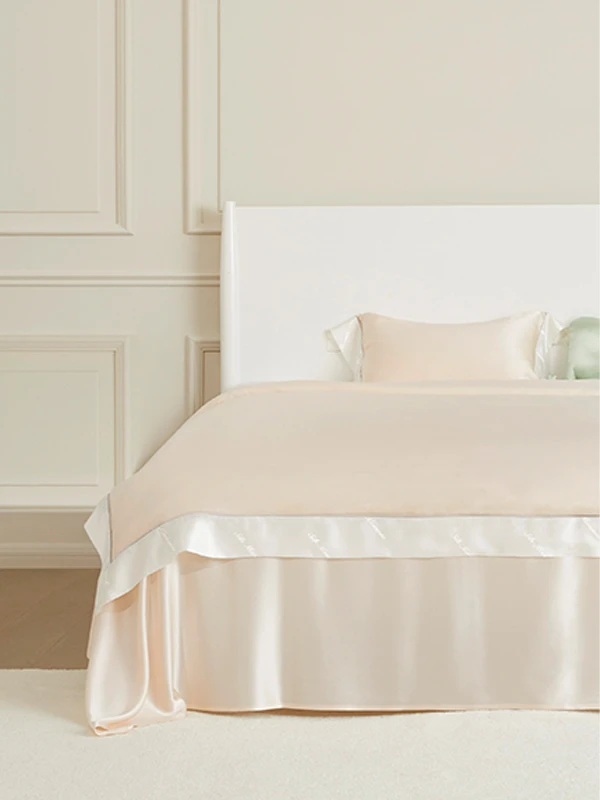
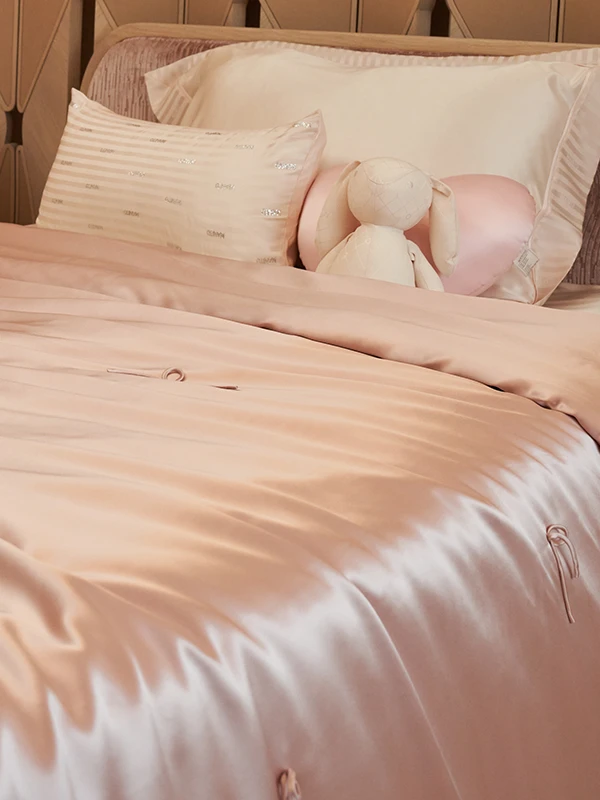
- Weave and Finish: Most silk sheets are crafted using a charmeuse weave. One side features a luminous sheen, while the other has a softer, matte finish. This construction creates a smooth, fluid handfeel. A tighter weave enhances both durability and longevity, allowing quality silk to drape beautifully and retain its natural luster over time.
- Safety Certifications: Look for OEKO-TEX® Standard 100. Means silk tested, no bad chemicals. That is good. You know it is safe for the skin.
- Craftsmanship: Little things matter. Neat seams, hidden zippers, double stitches — all show the silk maker’s care. These small things make silk last longer and feel nice every night.
Consider these elements together: momme weight, silk type, weave, safety certifications, and craftsmanship details. Taken as a whole, they define silk of exceptional quality—naturally soft, refined, and made to endure.
Conclusion
So, what is the minimum number of threads that would indicate good silk? To be candid, no single number can be cited. For silk sheets and pillowcases, the finest silk is generally about 22 momme, which translates to approximately 400 to 600 thread count. But the number alone doesn’t tell you everything. You need to feel the silk, check the weave, and see how it is made to know it is excellent. But again, silk isn’t like cotton —chasing big numbers doesn’t make sense here.
Go for 19–25 momme, 6A Mulberry silk, and a tight charmeuse weave. That’s what gives silk its natural shine and that cool, soft feel.
And when it comes from MANITO, you can be sure it’s made with care and the best materials. Once you’ve slept on real silk, you’ll get it — no number can describe that feeling.